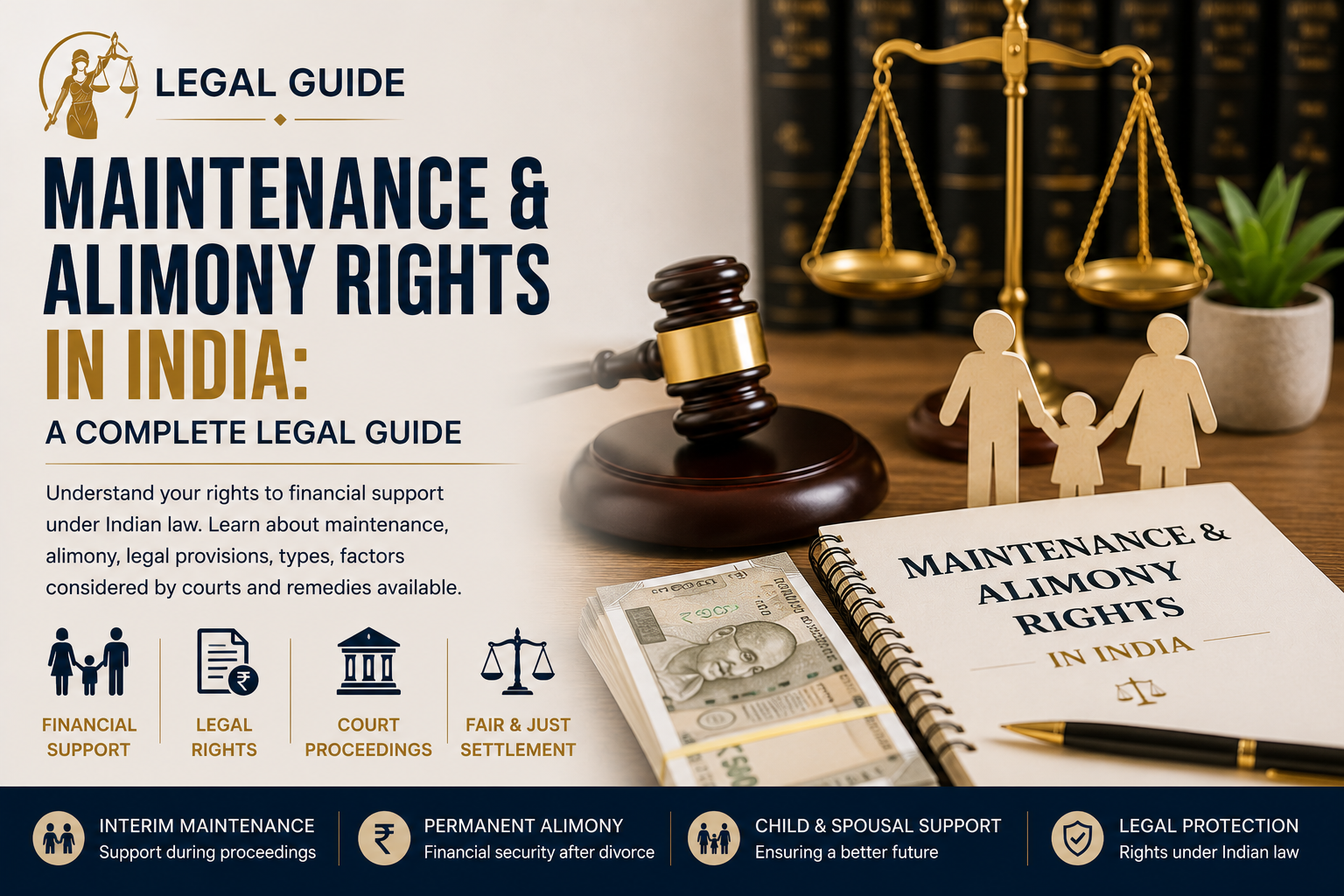
Maintenance & Alimony Rights in India: A Complete Legal Guide
Maintenance and alimony are important legal remedies available to a spouse who is unable to maintain themselves after separation, divorce or matrimonial disputes. Indian laws recognize the right to financial support and provide legal mechanisms to ensure that dependent spouses and children receive adequate maintenance.
What is Maintenance?
Maintenance refers to financial support provided by one spouse to another spouse, children or dependent parents. The purpose of maintenance is to prevent financial hardship and ensure basic living expenses are met.
What is Alimony?
Alimony is the financial compensation granted to a spouse during or after divorce proceedings. It may be awarded as a lump-sum amount or as periodic payments depending on the circumstances of the case.
Laws Governing Maintenance and Alimony in India
- Section 125 Criminal Procedure Code (CrPC)
- Hindu Marriage Act, 1955
- Hindu Adoptions and Maintenance Act, 1956
- Protection of Women from Domestic Violence Act, 2005
- Special Marriage Act, 1954
- Personal Laws Applicable to Different Religions
Who Can Claim Maintenance?
Depending upon the applicable law, maintenance may be claimed by:
- Wife
- Divorced Wife
- Children (Minor or Dependent)
- Dependent Parents
- In certain situations, Husband may also claim maintenance
Factors Considered by Courts
While deciding maintenance and alimony matters, courts generally consider:
- Income and Financial Status of Both Parties
- Standard of Living During Marriage
- Educational Qualifications
- Age and Health Conditions
- Number of Dependents
- Child Care Responsibilities
- Assets and Liabilities of Both Parties
Interim Maintenance
Interim maintenance is temporary financial assistance awarded during the pendency of legal proceedings. It ensures that the dependent spouse can meet daily expenses and legal costs until the final decision is passed.
Permanent Alimony
Permanent alimony may be awarded at the conclusion of divorce proceedings. The court may order monthly payments or a one-time lump-sum settlement depending upon the facts of the case.
Consequences of Non-Payment
Failure to comply with maintenance orders can result in legal action, recovery proceedings, attachment of property and other remedies available under law.
Why Legal Representation Matters
Maintenance and alimony disputes often involve complex financial and legal issues. Proper legal representation helps ensure accurate presentation of income details, financial requirements and relevant evidence before the Family Court.
Conclusion
Maintenance and alimony laws are designed to protect the financial rights of dependent spouses and children. Whether you are seeking maintenance or defending a maintenance claim, understanding your legal rights is essential. Consulting an experienced family law advocate can help you navigate the legal process effectively and secure a fair outcome.